

Founder Ecosystem Building: A Practical Guide to Launch Strong and Scale Faster
Founder Ecosystem Building is the strategic process of creating an environment where founders can access the people, capital, knowledge, and services they need to validate ideas grow companies and create lasting value. For entrepreneurs and community leaders this concept moves beyond the single founder to a networked approach that amplifies outcomes. This guide explains what Founder Ecosystem Building means why it matters and how teams can design and grow an ecosystem that supports startup success.
What Founder Ecosystem Building Really Means
At its core Founder Ecosystem Building centers on three linked goals. First it reduces friction for founders so they can move from idea to market faster. Second it increases the quality and quantity of available resources including talent mentorship capital and market access. Third it cultivates a culture that encourages learning experimentation and sharing. When these goals align founders are more likely to launch viable products hire the right talent attract investors and scale efficiently.
Key Elements of a Healthy Founder Ecosystem
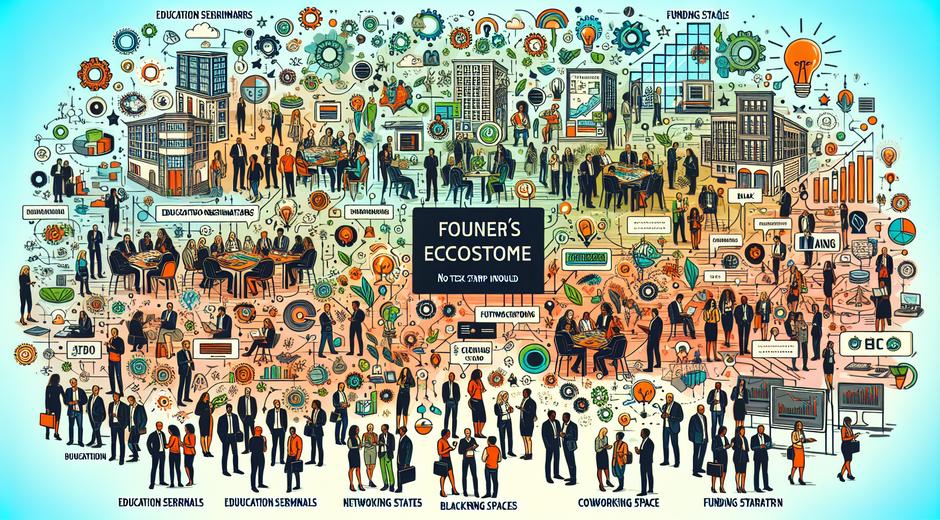
A thoughtful ecosystem has a set of core components that interact. Understanding these pieces helps ecosystem builders focus resources for maximum impact.
Community and peer networks
Active networks of founders investors advisors and service providers create pathways for feedback collaboration and deal flow. Peer support reduces founder isolation and speeds learning.
Access to capital
Early stage funding options including angel networks micro funds and seed investors bridge the gap between prototype and product market fit. Financial literacy and transparent investment processes increase capital efficiency.
Talent pipelines
Recruitment channels internships and partnerships with universities and training programs ensure startups can hire engineers product managers sales staff and marketing talent when needed.
Mentorship and advisory services
Experienced mentors help founders avoid common traps while advisors provide functional depth in areas like growth marketing regulatory compliance and international expansion.
Customer and market access
Strong connections to pilot customers distribution partners and enterprise buyers accelerate validation and revenue generation.
Physical and virtual spaces
Co working spaces accelerators and online platforms provide access to tools learning programs and a visible presence that attracts partners.
Why Founder Ecosystem Building Matters for Business Growth
Startup success is not random. Regions and cities with well formed ecosystems see higher company survival rates faster scaling and greater job creation. Ecosystems lower transaction costs by making it easier to find partners and learn from mistakes. They also attract outside capital and talent which creates a positive feedback loop. For policy makers investors and founders the returns on investing time and resources into ecosystem building are measurable and long lasting.
Steps to Build a Founder Ecosystem That Works
Building an effective ecosystem requires deliberate strategy and ongoing care. Below are practical steps that cities communities and organizations can follow.
Start with needs assessment
Map existing assets such as talent pools universities investors and service providers. Identify gaps that block founder progress such as access to seed funds or mentorship scarcity.
Define clear outcomes
Decide what success looks like for the ecosystem. Outcomes could include number of startups reaching product market fit jobs created or capital deployed into early stage ventures.
Design inclusive programs
Create programs that reach diverse founder segments. Inclusion increases the pool of high potential founders and makes the ecosystem more resilient.
Activate anchor institutions
Universities corporations and research labs can act as anchors by providing talent intellectual property and pilot customers. Formal partnerships amplify impact.
Build feedback loops
Collect founder feedback often and iterate on programs. Real time learning ensures resources address actual pain points.
Promote success stories
Visible wins attract attention from investors partners and new founders. Share case studies and host demo days to create momentum.
Funding and Finance Considerations
Capital is a core enabler. Ecosystem builders should target multiple funding channels to create a ladder founders can climb as they grow. Grants and microgrants reduce early risk especially for under served founders. Angel networks and seed funds provide the initial equity that validates business models. Later stage venture and corporate investment support scaling. Alongside capital it is critical to provide founders with financial training covering unit economics fundraising strategy and investor relations. For curated finance content and market perspective visit FinanceWorldHub.com which offers articles guides and tools for startup finance professionals.
Operational Playbook for Community Leaders
Community leaders can follow a tactical playbook to move from planning to impact.
Create a shared vision
Bring stakeholders together to align on priorities create a shared roadmap and assign roles. Collective ownership speeds execution.
Run regular programming
Workshops office hours pitch clinics and mentor matching events create repeated touch points and help founders progress through stages.
Measure and publish metrics
Track leading indicators such as founder satisfaction investment activity cohort progression and job creation. Transparent metrics help secure ongoing support.
Leverage technology platforms
A central online hub can host events facilitate connections and share resources. This lowers coordination cost and helps scale community engagement. Learn more general business resources at businessforumhub.com which curates articles templates and networking opportunities for entrepreneurs and ecosystem builders.
Mentorship and Learning Strategies
Mentorship is a multiplier. Effective mentorship programs pair founders with advisors who have relevant experience not only in industry but in company stage. Structured formats such as cohort mentoring office hours and problem focused sessions yield better results than ad hoc introductions. Invest in mentor training to improve feedback quality and establish clear expectations about time commitment confidentiality and outcome orientation.
Complement mentorship with modular learning content. Short courses and micro credentials in product market fit growth experiments fundraising and hiring allow founders to learn on their own schedule. Encourage application of new skills through structured pilot projects and peer review.
Measuring Success and Adapting Over Time
Assessment should be continuous. Mix quantitative metrics such as capital deployed companies launched jobs created and survival rates with qualitative measures such as founder sentiment network quality and perceived value of programs. Use cohort analysis to see how changes in programming affect outcomes over time. When metrics point to a gap adapt quickly and test new interventions at small scale before wide roll out.
Common Mistakes to Avoid
Many ecosystem builders make similar errors. Avoid designing programs for what sounds good rather than what founders actually need. Do not rely on a single source of funding or a single flagship event to create long term impact. Resist the urge to measure only outputs like number of events held. Focus on outcomes that move founders forward.
Conclusion
Founder Ecosystem Building is an investment in a region future. When executed with strategy inclusivity and measurement it reduces friction for founders increases access to capital and talent and accelerates company building. For founders community leaders and investors the work is ongoing but the payoff is clear. Well built ecosystems create more successful companies stronger local economies and a culture that celebrates learning and shared success. Start today by mapping assets learning from peers and setting a few clear measurable goals that will guide your next steps.