

Lean Management
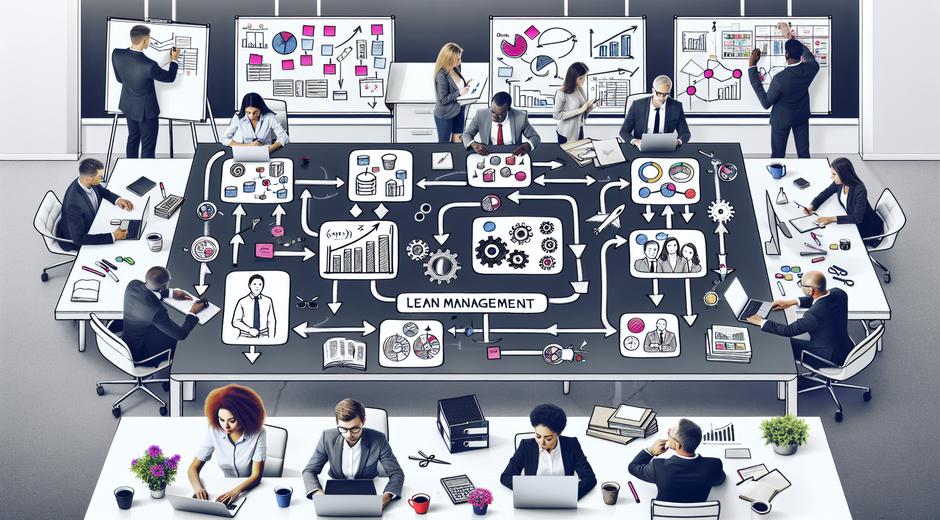
Lean Management is a proven approach that helps organizations deliver more value to customers while using fewer resources. Rooted in the production systems of global manufacturers it has evolved into a universal mindset that applies across industries from health care to software development. This article explains the core ideas behind Lean Management and offers practical guidance for leaders and teams who want to reduce waste boost quality and build a culture of continuous improvement.
What Lean Management Means
At its core Lean Management focuses on maximizing value for the customer while minimizing any activity that does not add value. That means identifying and removing waste optimizing process flow and empowering frontline teams to make improvements every day. Lean is not a short term project or a toolkit to apply once and forget. It is a long term cultural shift that places respect for people and relentless pursuit of better ways to work at the center of business transformation.
Five Guiding Principles
Lean thinking is often summarized in five guiding principles that provide a clear path from strategy to daily practice:
- Specify value from the perspective of the customer so the organization knows what matters most.
- Map the value stream by tracing every step required to deliver that value and highlighting wasteful actions.
- Create flow by reorganizing steps so work moves smoothly and without delay.
- Establish pull so production or service delivery responds to actual demand rather than forecast.
- Pursue perfection through continuous improvement engaging everyone in finding better solutions.
These principles help organizations shift focus from internal convenience to external value which leads to higher customer satisfaction and lower operating cost.
Key Tools and Techniques
Lean Management offers a set of practical tools that teams can use to diagnose issues and design improvements. Common techniques include:
- 5S to organize and standardize the workplace ensuring safety efficiency and visibility.
- Value stream mapping to visualize the flow of materials and information and to spot areas for improvement.
- Kaizen events which are short focused improvement workshops that produce rapid results.
- Kanban systems that enable visual control of work in progress and help implement pull systems.
- Root cause analysis using methods such as the five why approach to find underlying causes of problems.
- Poka yoke which focuses on error proofing to prevent defects from occurring.
Selecting the right combination of tools depends on the organization context and the specific problems being solved. Small steady improvements often compound into large gains over time when combined with strong leadership and training.
Steps to Implement Lean Management
Successful Lean Management initiatives follow a deliberate sequence that balances planning with hands on work. A practical implementation path looks like this:
- Secure leadership commitment so that the transformation receives sustained attention and resources.
- Educate teams at all levels in core Lean concepts and language so everyone can contribute.
- Choose pilot areas where improvements will be visible and measurable and where frontline staff are ready to engage.
- Map current processes identify waste and design experiments for improvement using small rapid cycles.
- Measure results using clear metrics and use that data to iterate and scale successful practices.
- Embed changes into standard work and create routines that sustain gains.
Leaders must balance a top down direction with bottom up engagement. Empowering those closest to the work to propose and test improvements creates ownership and a steady stream of practical innovations.
Measuring Lean Success
Meaningful metrics connect Lean efforts to outcomes that matter. Common performance indicators include:
- Lead time and cycle time reductions which show faster delivery.
- Quality metrics such as defect rates or customer complaint counts.
- Productivity measures that capture output per labor hour or cost per transaction.
- Inventory levels and working capital tied to waste reduction in physical flow.
- Employee engagement metrics that reflect cultural change and involvement in improvement work.
Metrics should be simple visible and tied to the value stream being improved. Over time teams can develop visual dashboards and daily routines that make performance transparent and actionable.
Common Pitfalls and How to Avoid Them
Many Lean efforts stall because of predictable traps. Awareness of common pitfalls helps teams design stronger programs. Typical challenges include:
- Pursuing tools without shifting culture which produces temporary gains and eventual backslide.
- Starting with complex systems before mastering fundamentals leading to confusion and wasted effort.
- Measuring the wrong things which rewards activity instead of value creation.
- Failing to involve frontline staff who hold critical insight about process reality.
Avoid these traps by prioritizing training clear communication and visible quick wins that build credibility and momentum. Celebrate small successes and use them to expand scope gradually so improvements are sustainable.
Lean Beyond Manufacturing
While Lean has roots in manufacturing it is highly relevant to service industries health care public sector and knowledge work. Common applications outside production include reducing patient wait times streamlining administrative tasks improving software delivery and accelerating time to market for new products. The same principles of value focus flow and continuous improvement translate directly into these contexts and yield measurable returns.
Practical Example
Consider a regional clinic that applied Lean Management to reduce patient wait times. The team mapped the patient value stream and found multiple handoffs duplicated paperwork and inefficient scheduling. By standardizing registration using a 5S approach rearranging patient flow and piloting a pull based appointment system the clinic reduced average wait time by more than half and increased patient satisfaction. The improvement team held weekly Kaizen sessions and used visual boards to track performance. Over months they expanded successful practices to other clinics resulting in system wide gains.
Resources and Next Steps
If your organization is ready to explore Lean Management start by building a simple training plan and identify one process where a pilot can deliver clear results. Reach out to experts read practical case studies and connect with communities that share real world tips and templates. For more learning resources and articles across business topics visit businessforumhub.com which offers guides and insights to support leaders through each step of the journey. For practical training tools and curated content you may also find useful resources at Romantichs.com.
Conclusion
Lean Management is more than a set of techniques. It is a cultural approach that aligns the entire organization around delivering value continuously. When leaders commit to learning empowering teams and measuring what matters Lean thinking can transform performance reduce cost and deepen customer loyalty. Start small focus on clarity and build routines that make improvement part of every day work. Over time small gains compound into strategic advantage.