

Long Term Business Thinking
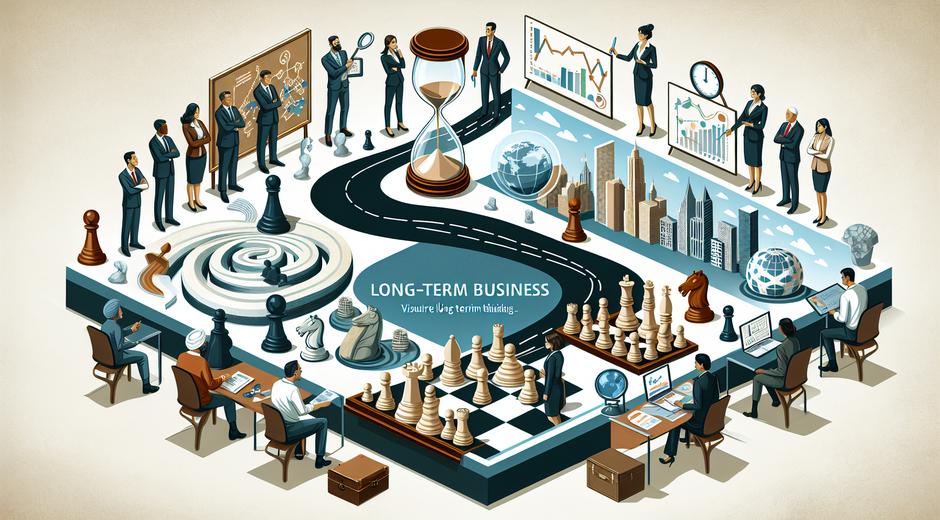
Long Term Business Thinking is not a slogan. It is a mindset that shapes decision making across strategy operations and culture. Leaders who adopt long term business thinking move beyond quarterly cycles and short term fixes to create durable value for customers employees shareholders and communities. This article explores why this mindset matters how to build it and practical steps to embed it into everyday business practice.
Why Long Term Business Thinking Matters
Many organizations are trapped in a loop of urgent tasks and immediate metrics. That pattern can produce quick wins but it often reduces resilience innovation and trust. Long term business thinking shifts focus toward sustained growth and adaptability. It prioritizes investments in capabilities that compound over time such as strong customer relationships robust operational systems and a culture of continuous learning. When applied consistently this approach lowers volatility increases predictability and improves reputation in the market.
The Core Principles
There are five core principles that guide long term business thinking. First invest in strategic assets that accumulate value over time. These assets include brand equity intellectual property and talent. Second balance growth with profitability to ensure sustainability. Third adopt a systems perspective that recognizes interdependence across functions and stakeholders. Fourth commit to disciplined experimentation that allows iterative learning without sacrificing stability. Fifth build governance that aligns incentives with long term outcomes so that decision makers are rewarded for future oriented choices.
Practical Steps to Build Long Term Business Thinking
Turning the idea into practice requires structure and persistence. Start with a clear long range plan that connects vision to execution. Translate that plan into measurable milestones and review them at regular intervals that are longer than monthly cycles. Encourage leaders to set targets that reflect five year or ten year horizons as well as year to year goals.
Second create budget processes that reserve a portion of resources for strategic investment. This can mean a dedicated fund for innovation capability building or community initiatives. By protecting these funds from short term reallocation you enable projects that need time to prove their value.
Third build data systems that measure leading indicators not just lagging outcomes. Examples include customer engagement metrics product adoption rates and employee skill development. Leading indicators help you detect opportunities and challenges early so you can adapt without disrupting ongoing operations.
Fourth revise performance review systems. Appraisal processes that focus only on the last quarter encourage risk averse behavior. Instead incorporate evaluation criteria that reward knowledge building mentoring cross functional contributions and progress on ambitious projects that align with the long range plan.
Leadership Behaviors That Support Long Term Thinking
Leaders set the tone. To model long term business thinking they must communicate a clear narrative about future intent and link daily tasks to that story. They should allocate time to long range discussions and be visible in efforts to build capabilities. Patience is essential. Leaders need to tolerate short term noise while staying focused on trajectory.
Another critical behavior is transparency. When trade offs are real explaining the rationale for prioritizing long range goals builds trust. Transparency also creates a shared sense of ownership that galvanizes teams even when outcomes unfold over long periods.
Embedding Long Term Thinking in Culture
Culture is the engine that converts strategy into behavior. To nurture long term business thinking cultivate curiosity and intellectual humility. Celebrate learning from experiments even when they do not deliver immediate success. Share stories of projects that generated value over time and highlight career paths that reward persistence and cross team collaboration.
Design rituals that remind people of the long view. For example host quarterly foresight sessions where teams explore future scenarios and their implications. Use onboarding to teach new hires how daily work connects to multi year objectives. Over time these rituals create cognitive habits that make long term thinking natural rather than forced.
Measuring Success
Metrics must reflect the extended horizon. In addition to standard financial measures include indicators such as customer lifetime value retention of key talent time to market for strategic products and progress on capability building programs. Use a balanced scorecard that pairs short term operational metrics with long term strategic indicators. Review this scorecard at executive meetings and use it to guide resource allocation.
Remember evaluation should emphasize direction and momentum not perfection. Projects that move core metrics toward the strategic target are often more valuable than those that deliver perfect results in a narrow area.
Common Pitfalls and How to Avoid Them
One common pitfall is confusing patience with passivity. Long term business thinking requires active management. Regular reviews and course corrections keep long range efforts aligned with market realities. A second pitfall is misaligned incentives. If compensation systems reward only short term outcomes you will see behavior that undermines strategic investment. Fix this by including long range criteria in compensation and promotion decisions.
Another trap is neglecting operational excellence. Long term initiatives fail if daily execution breaks down. Maintain standards for quality consistency and customer experience while you pursue forward looking projects. Finally beware of isolation. Strategy works best when it is integrated with the rest of the organization. Create cross functional teams and shared accountability to ensure strategic initiatives receive broad support.
Case Example
Consider a company that decided to shift from a product focus to a platform focus. Leadership committed resources to platform architecture talent and partner networks over a five year period. In the short run revenue growth slowed and some stakeholders expressed concern. But because leaders protected strategic funding maintained quality and communicated progress the company gradually unlocked new revenue streams higher customer retention and lower acquisition costs. The initial sacrifice created compounding returns that would not have been possible under a pure short term approach.
Where to Learn More
Developing long term business thinking is an ongoing journey. Curated resources case studies and peer insights can accelerate the learning curve. For those seeking practical tools and a community of peers consider visiting the hub for business leaders at businessforumhub.com where you will find guides frameworks and discussions that support sustained value creation.
Conclusion
Long Term Business Thinking is an investment in the future of your organization. It blends strategic clarity disciplined execution and a culture that values learning and resilience. By aligning structure incentives and leadership behavior with multi year horizons you can build capabilities that create lasting competitive advantage. Adopt the principles in this article make deliberate changes to planning measurement and rewards and you will see decisions shift from short term convenience to strategic progress. For a broader platform of resources tools and community support visit BusinessForumHub.com and begin the process of turning long term intent into lasting impact.